Support & Email
Customer Support
Our Location
7765 Pecue Lane, Baton Rouge, LA 70809
7765 Pecue Lane, Baton Rouge, LA 70809
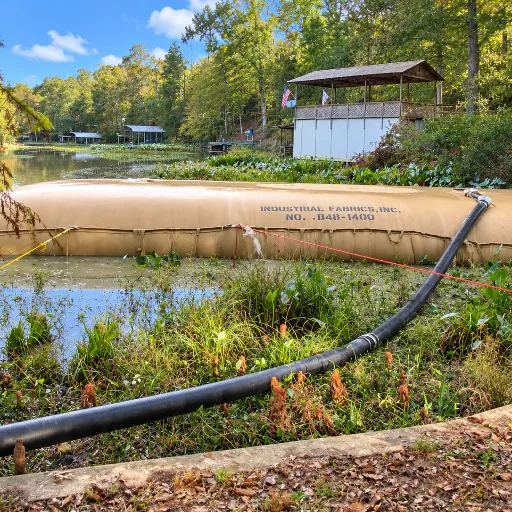
Dewatering tubes for high-volume solids separation, structural tubes for shoreline and marine construction — both custom-fabricated to your site.
No belts, gears, or mechanical dewatering equipment to rent or buy. The process is neat, clean, and largely odorless.
Turn a 90-day mechanical dewatering job into a 30-day job, with up to 70% reduction in haul-away volume.
Over 1,000 dewatering projects completed and more than 75 miles of shoreline protected.
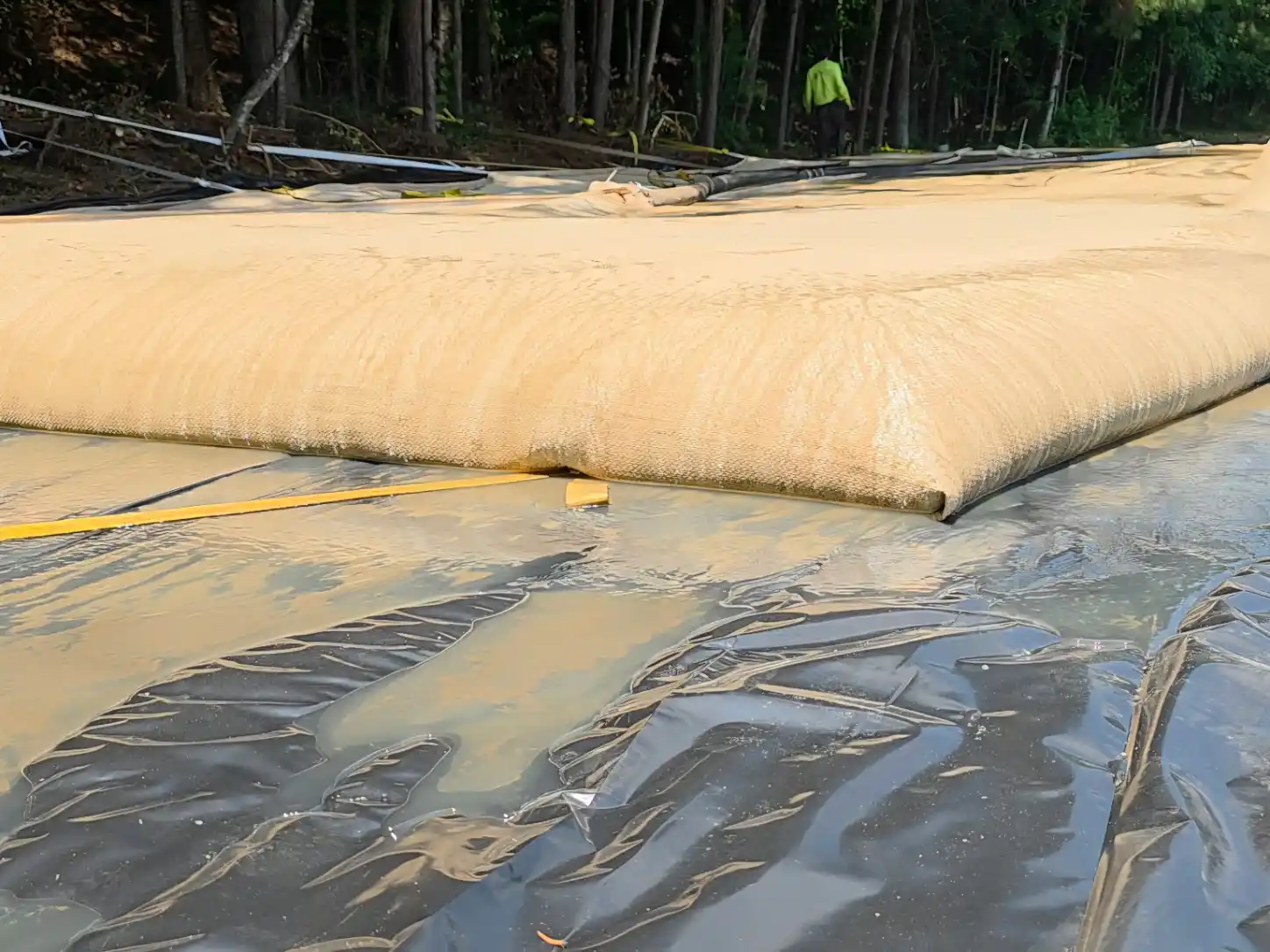
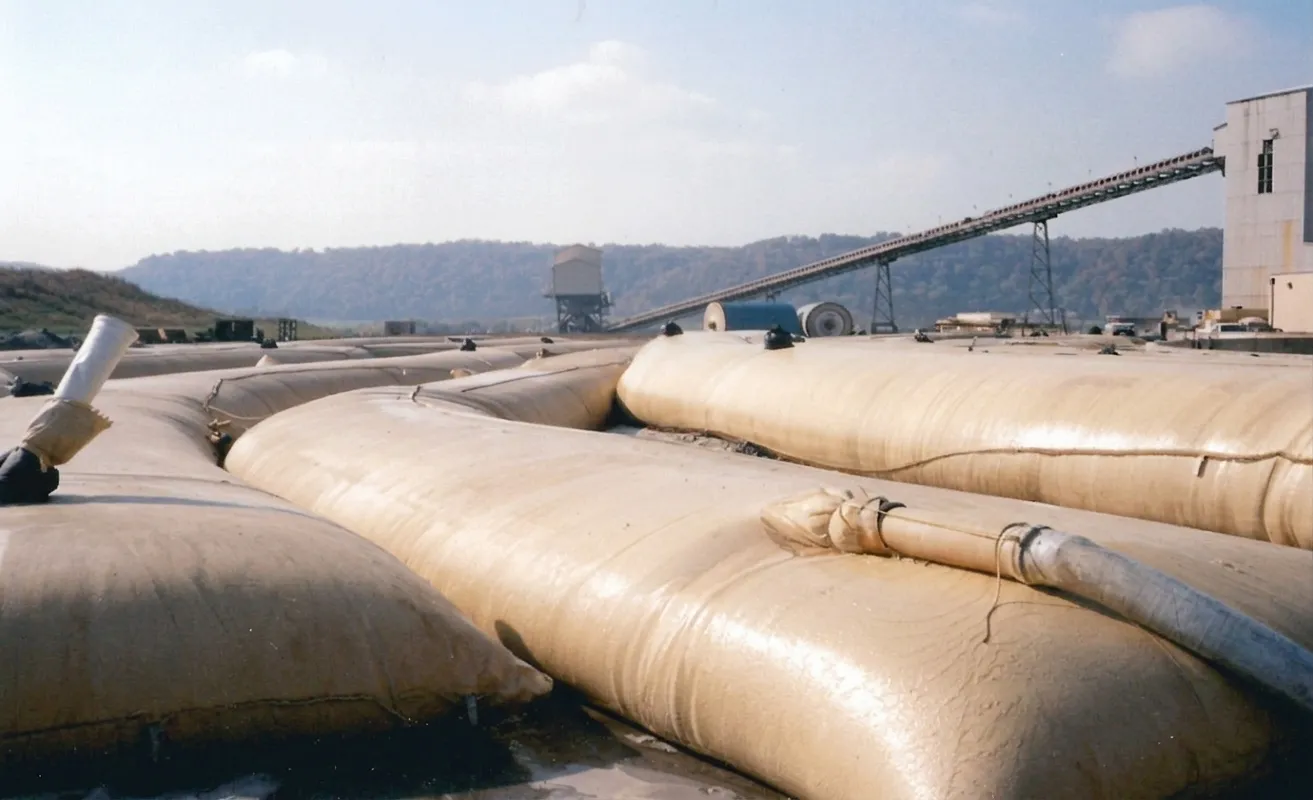
EnviroTubes® are high-strength, permeable woven geotextile tubes engineered for efficient sludge, sediment, slurry, and dredged material dewatering. The simple system requires no belts, gears, or complicated mechanical equipment. Slurry is pumped directly into the tube, allowing water to filter through the geotextile while solids remain contained.
As filling continues, retained solids consolidate and dewater, significantly reducing material volume. Volume reduction can reach up to 70%, producing material that can be more easily handled, transported, and disposed of as solid waste while minimizing site preparation and mechanical excavation requirements.
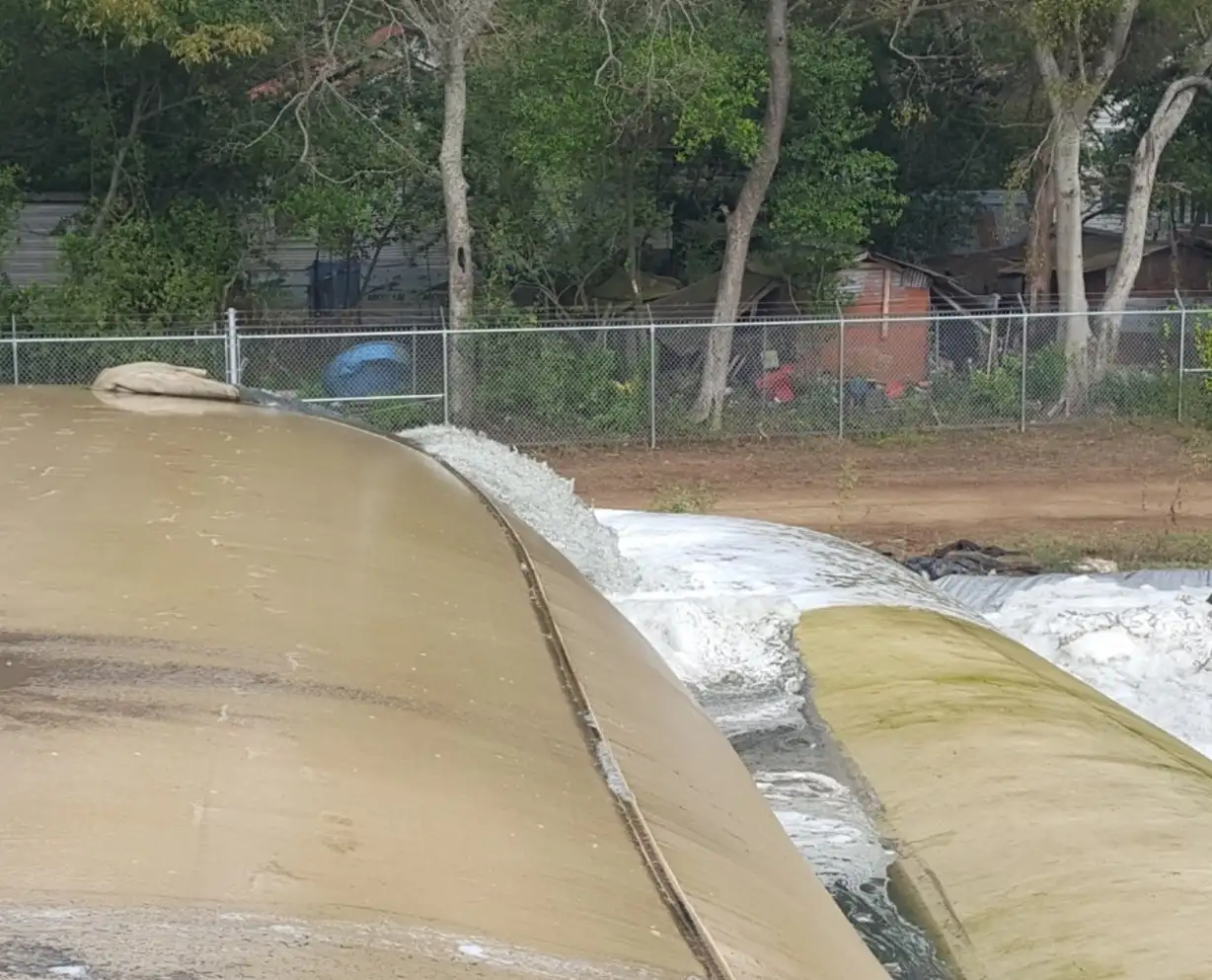
EnviroTubes® structural geotextile tubes are manufactured from high-strength woven geotextiles with reinforced seams engineered to withstand the pressures generated during filling. Unlike temporary dewatering applications, structural tubes are filled with sand or suitable onsite material and remain permanently in place as the core of an engineered marine or hydraulic structure.
EnviroTubes® provide a proven solution for constructing breakwaters, levees, dikes, groins, dune cores, jetties, underwater structures, shoreline protection systems, and marine spoil-containment berms. The technology was developed with input from the U.S. Army Corps of Engineers and provides engineers and marine contractors with an efficient alternative to conventional construction methods.
Sand is the preferred fill material because it provides excellent stability with minimal settlement after filling. Where project conditions permit, suitable in-situ materials may also be used. Tubes can be installed end-to-end for continuous structures or stacked in a pyramid configuration to achieve greater elevations and structural mass.
Using locally available fill can reduce the need to import large quantities of stone, aggregate, or sand while minimizing heavy-equipment requirements. Industrial Fabrics, Inc. provides technical assistance with tube sizing, project layout, filling procedures, slurry requirements, port spacing, stacking configurations, and installation planning for coastal, marine, and hydraulic construction projects.
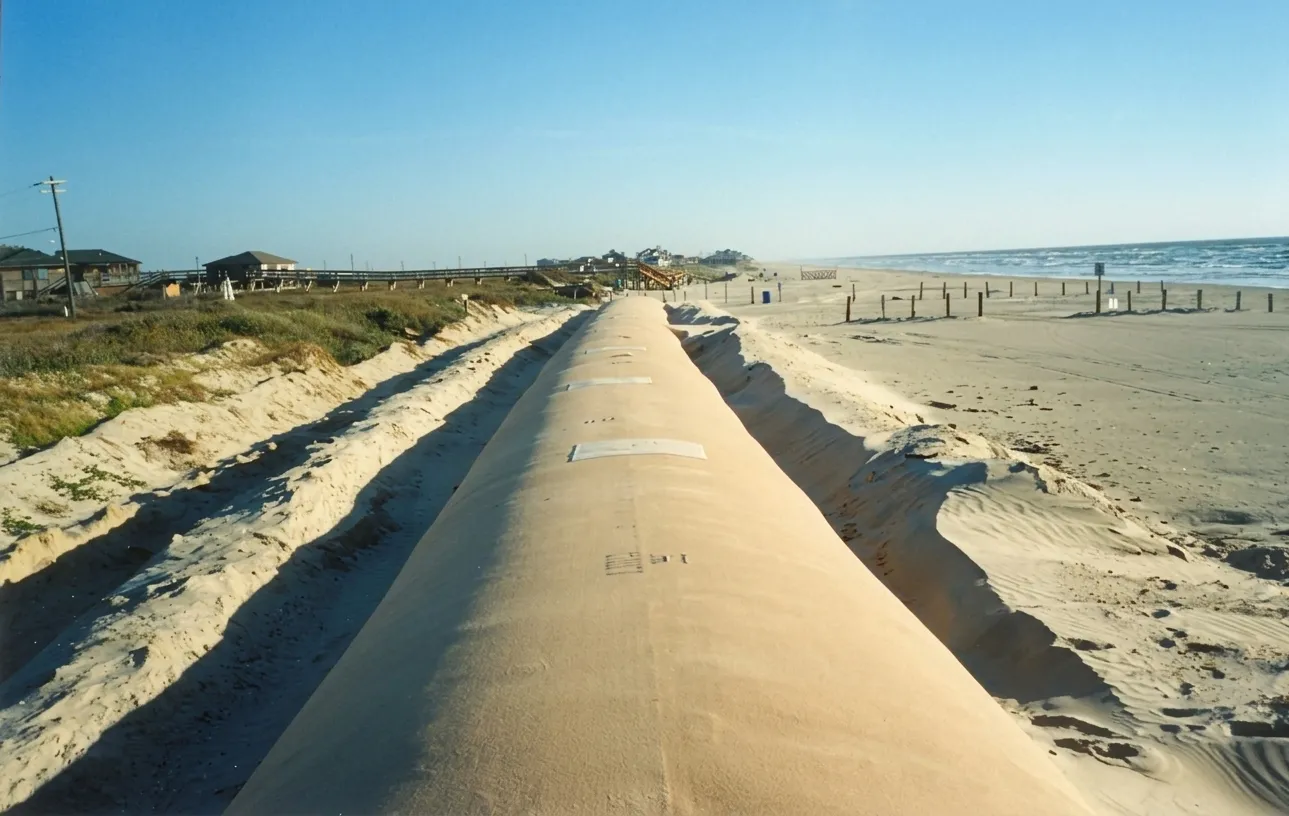
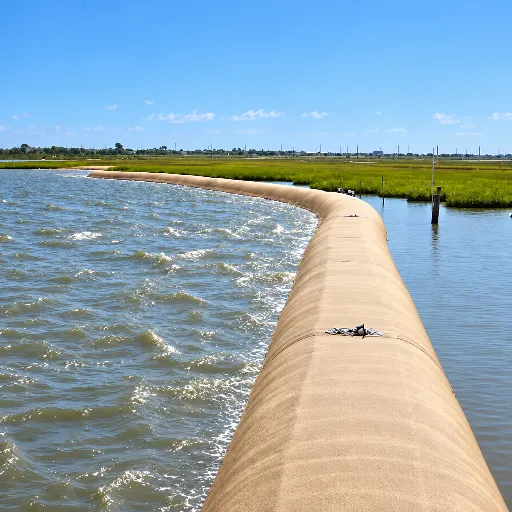
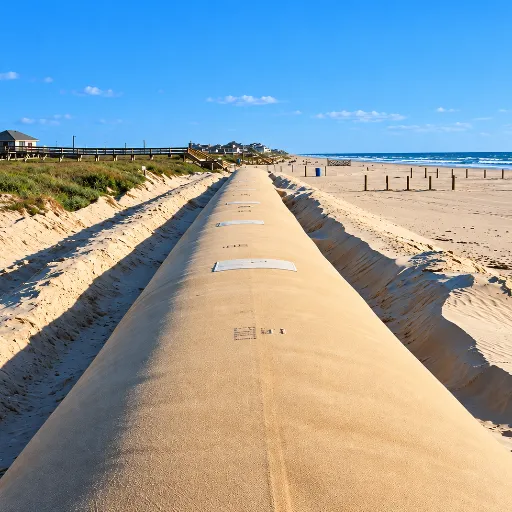
EnviroTubes® scour aprons provide foundation protection and erosion control for structural geotextile tube installations exposed to waves, currents, tidal action, and hydraulic filling. Installed beneath and alongside the main tube, the geotextile apron helps prevent foundation undermining and reduces localized scour around the completed structure.
Scour aprons can extend along one or both sides of the EnviroTube® depending on site conditions and exposure. An anchor tube incorporated along the outer edge is filled to secure the apron and provide additional scour protection beyond the main structure. For installations exposed to heavy surf or significant wake action, additional nonwoven geotextile protection can be incorporated to improve fill retention and long-term performance.
Industrial Fabrics, Inc. also supplies supporting products and installation accessories for marine, coastal, dewatering, and structural EnviroTube® projects. Available solutions include protective underlayments for land-based installations, Hanging Bag Test kits for evaluating material dewatering and shrinkage characteristics, gravel silos for controlled filling, and floating transport systems for positioning tubes and scour aprons on the water.
Together, these components provide contractors and engineers with a more complete geotextile tube installation system, supported by IFI technical expertise from project planning and material evaluation through installation.
EnviroTubes separate solids from liquids across municipal waste streams, containing fine particles while filtrate passes through the fabric. The result is less disposal volume, lower hauling costs, and simpler handling for plants managing sludge and treatment residuals. Typical work includes sewage sludge lagoons and digester sludge, and at water treatment plants, lime waste and aluminum sulfate waste.
The same approach handles municipal drainage runoff from airfields, parking areas at supermarkets and shopping centers, highways, and residential areas.
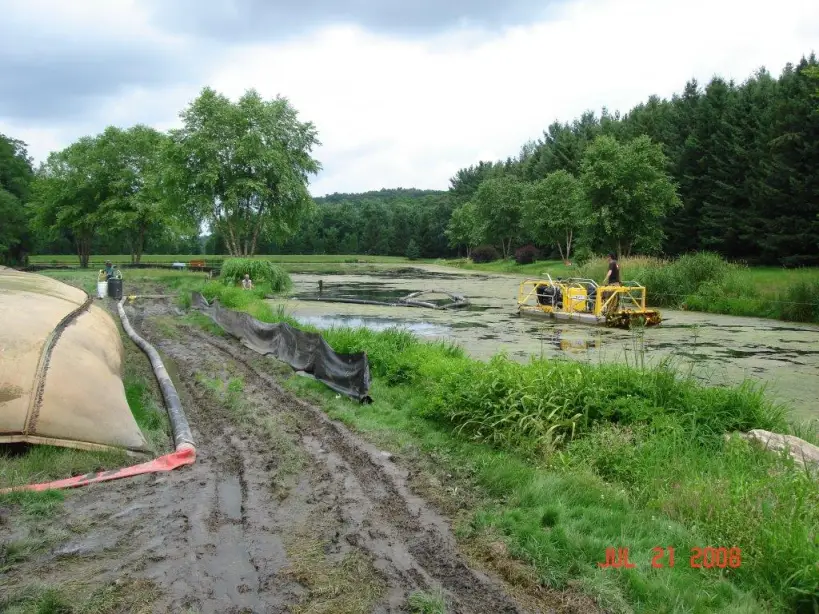
Millions of gallons of sludge have been dewatered for gas and electric companies, paper mills, industrial plants, nuclear power plants, and chemical companies. Paper mills use EnviroTubes on wastewater lagoons and water filtration residuals, and fly ash is dewatered wet or dry from coal power plants, municipal waste streams, and paper and lumber mills. Chemical lagoon work covers potash and phosphate, and the technology has been applied to specialty streams including radon-contaminated sheetrock waste.
In mining and energy, tubes handle tailings from oil shale, iron ore, copper, silver, and gold operations, along with drilling mud and cuttings from oil and gas wells onshore and offshore. Agricultural operations use them on animal waste lagoons at pork, dairy, chicken, and cattle farms, and the tubes also serve farming and mining site runoff and oil spill response.
EnviroTubes dewater fine-grained dredged material, clean or contaminated, and are widely used to replace open settling ponds on dredge jobs. For more than three decades the same technology has protected shorelines and rebuilt beaches, remaining nearly invisible once installation is complete.
Coastal work includes groins, offshore wave breakwaters, beach nourishment, shoreline structures, onshore and offshore stability berms, dune cores, and coastal sand dune protection. In marine construction, tubes support and protect bridge piers and piling, tunnels, pipeline and utility cable crossings, walls, abutments, foundations, wharf supports, offshore drill rig supports, and rock groins and jetties, along with water outfall protection and wind erosion control.
EnviroTubes are used to reclaim land from the sea and to build and protect wetland areas, with dozens of habitats restored using the technology. Applications include containment islands, wetland construction and protection, and wildlife habitat such as oyster reefs and fishing reefs.
Because structures are built from dredged or in-situ material, the approach puts spoil to beneficial use with minimal environmental impact and low ongoing maintenance.
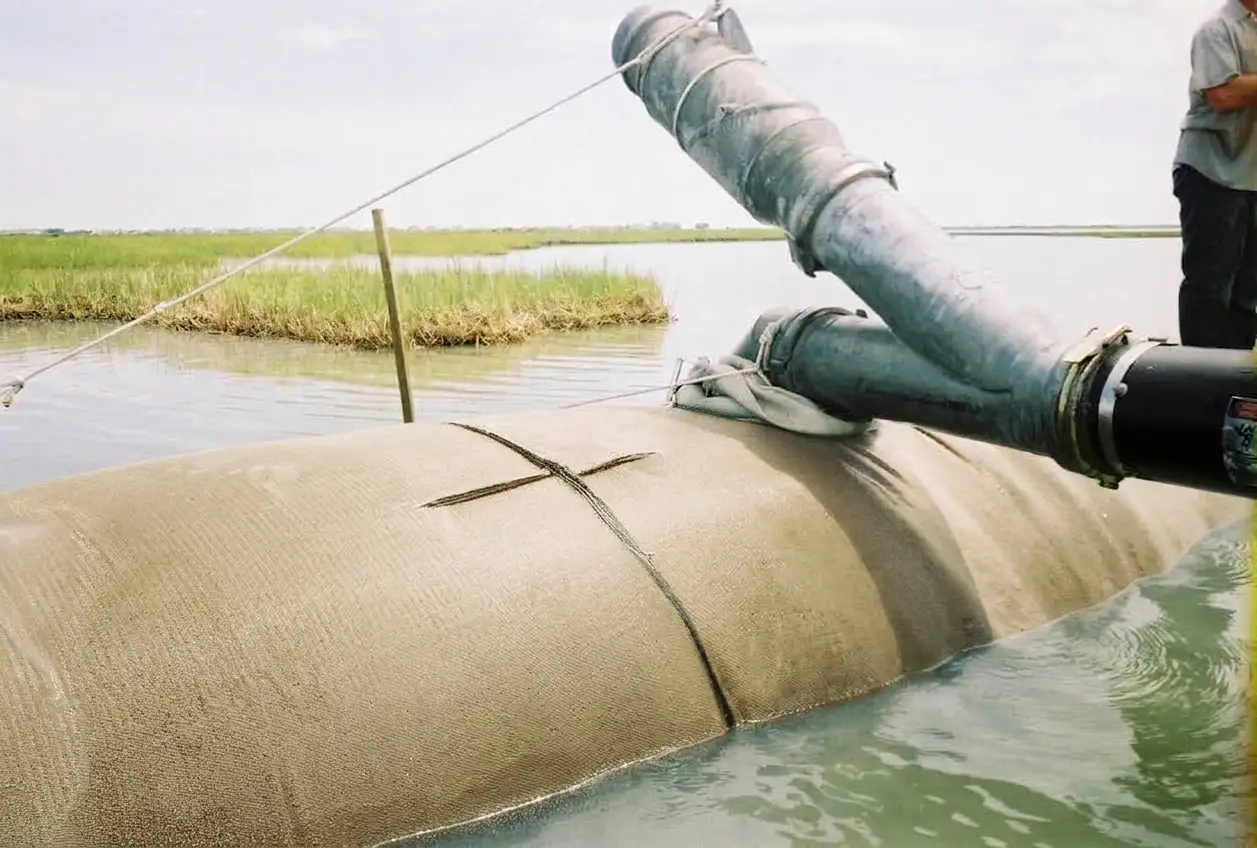
Tubes are filled with in-situ material and left permanently in place, which makes them practical for river training and flood protection where hauling in rock or sand is impractical. River work covers thalweg sill structures, contraction dikes, shoreline structures, and both temporary and permanent flood protection dikes. Dike applications include FEMA temporary deployments, containment dikes, sub-division dikes, spur dikes, underwater control dikes, salt water wedge control, thalweg control dikes, bendway weirs, mud flat dikes, hurricane protection dikes, and dike breach repair.
General civil uses run from stability berms, erosion control, weirs, and gully repair through silt fence, desert sand dune protection, rock slide and avalanche protection, noise abatement structures, walls, encapsulated-soil roadways, and surcharge for dewatering applications. Tubes also serve as barricades in domestic and military settings — protecting explosives, equipment, and personnel — and as pipeline ballast for river crossings, soft soils, and permafrost.
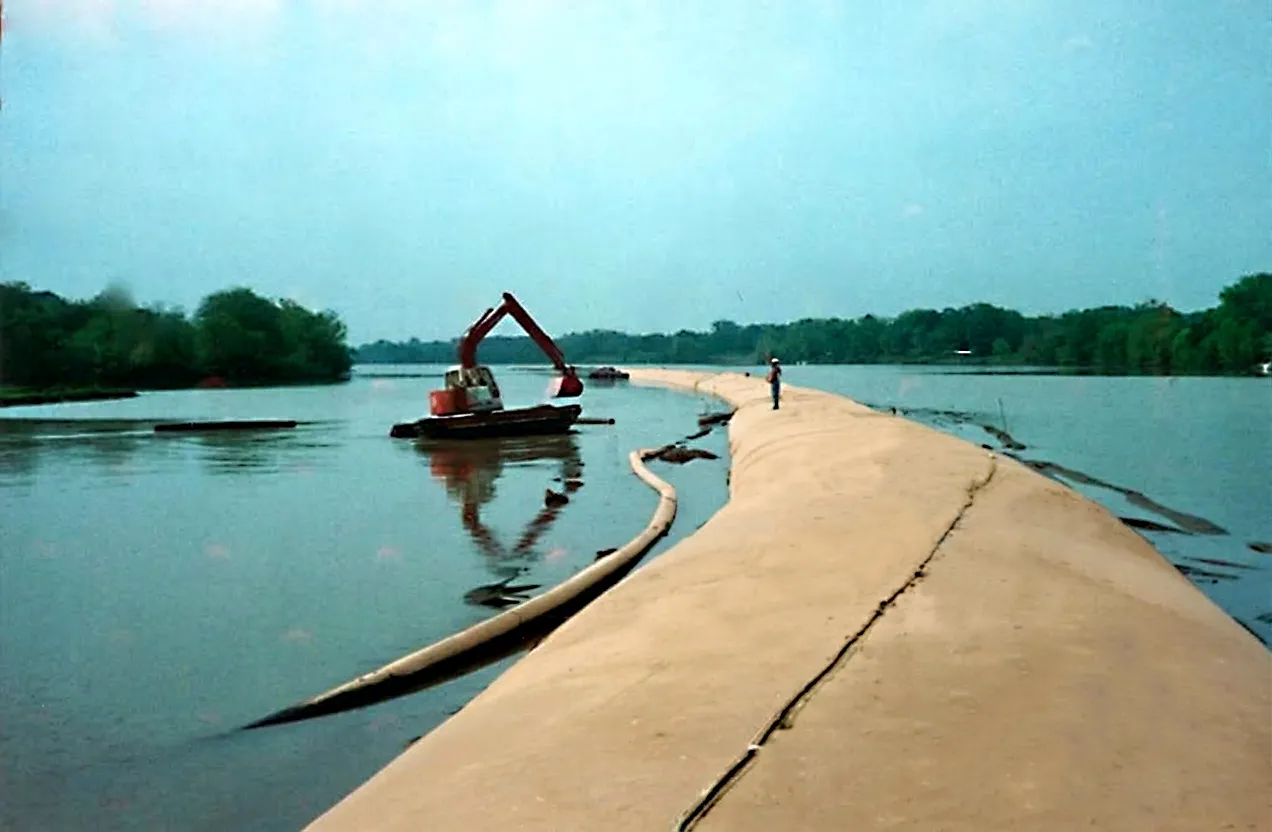
See how this product line is used across roads, slopes, drainage, and site development projects.
Explore Applications

Looking for a customized solution for your next project? Our team of experts is ready to support you with design consultation, technical assistance, and product guidance.